A house renovation cost in London falls between roughly £1,400 and £3,500 per square metre in 2026, and the borough you build in moves that figure more than most homeowners expect. A stripped-back refurbishment in Ealing and a structural remodel in Notting Hill can share an identical spec sheet and still differ by 40%. This guide sets out the current rates, explains what drives the gap, and shows you exactly which local rules add cost in Kensington, Chelsea, Fulham, Hampstead, Barnet and St Albans.
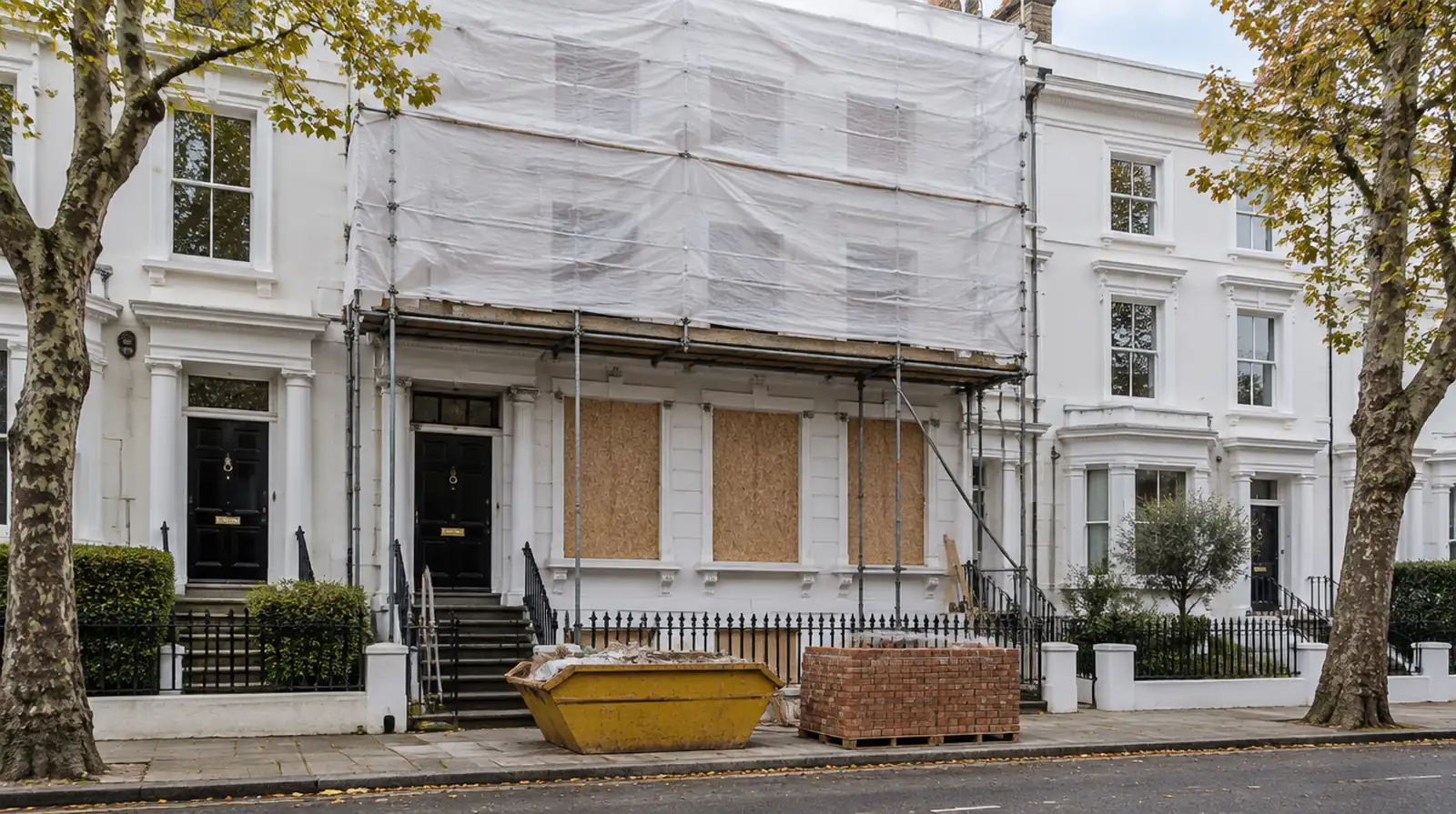
What does a house renovation cost in London in 2026?
Use these blended whole-house rates as your opening benchmark. They cover construction works only and exclude VAT, professional fees and furniture.
| Level of work | Cost per m² (ex VAT) | Typical 3-bed, 110 m² house |
|---|---|---|
| Cosmetic refresh | £900 – £1,400 | £99,000 – £154,000 |
| Standard renovation | £1,400 – £1,900 | £154,000 – £209,000 |
| Full renovation, new services | £1,900 – £2,600 | £209,000 – £286,000 |
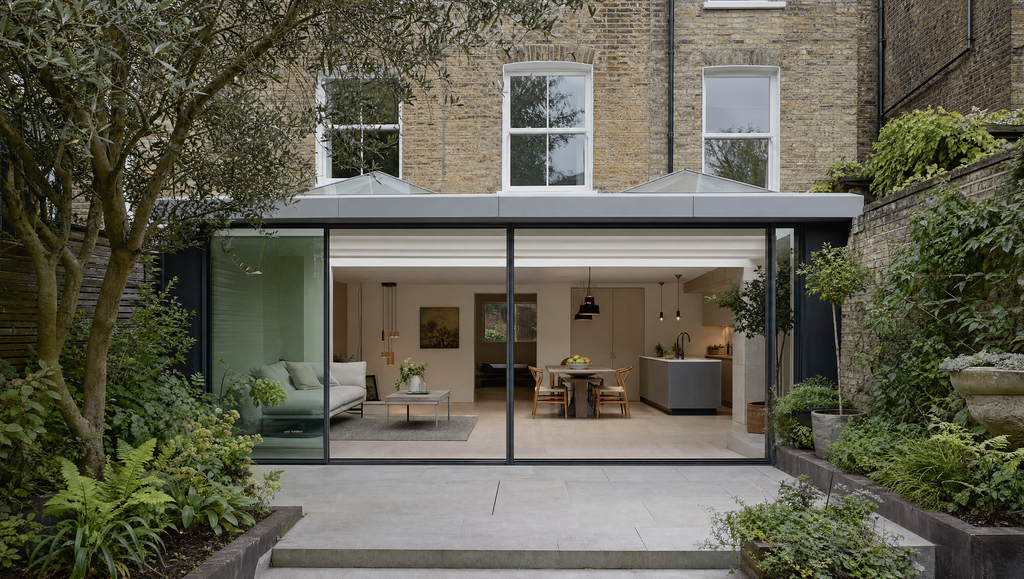
| Structural remodel or extension | £2,800 – £4,500 | £308,000 – £495,000 |
| Prime heritage specification | £4,500+ | £495,000+ |
Two forces push these numbers upward. First, construction inflation still outruns consumer inflation: the BCIS General Building Cost Index, which tracks labour, plant and materials together, showed annual inflation of 3.8% in March 2026, against CPI of 3.3%. Second, BCIS forecasts building costs to rise 13.1% over the next five years, with tender prices climbing 15.5%. Anyone budgeting a 2027 start should price that in now.
Run your own numbers through our renovation cost calculator before you brief an architect.
Why cost per square metre beats every other benchmark
Cost per square metre works because it lets you test feasibility before drawings exist. You multiply your floor area by a rate, add fees and VAT, and discover within an hour whether your brief and your budget belong in the same conversation.
However, one blended rate hides an important split. New structural work carries foundations, drainage, steelwork, external envelope, glazing and fresh services. Existing rooms that need rewiring, replastering and decorating carry none of that. So split your project in two and price each half separately:
- New or structurally altered areas: £2,800 – £4,500 per m²
- Refurbished existing areas: £1,400 – £2,200 per m²
A 130 m² house gaining a 25 m² rear extension therefore prices as 25 m² at the higher rate plus 105 m² at the lower one. That method produces a far tighter figure than a single average, and it explains why two projects of identical size quote hundreds of thousands apart.
The prime London premium nobody budgets for
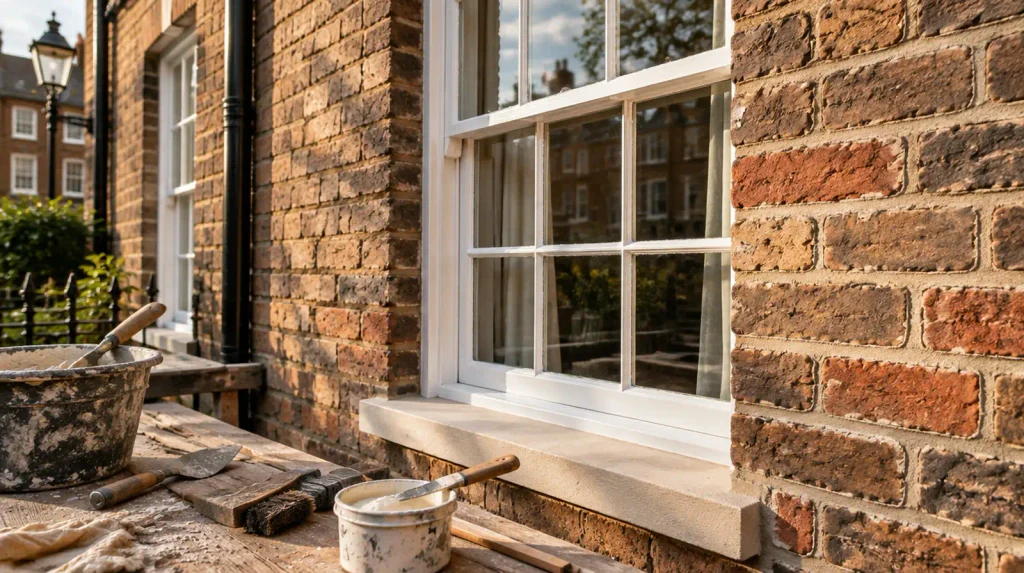
Here is where the house renovation cost in London diverges sharply from the national picture. Planning constraint, not specification, drives most of the difference in prime postcodes.
Conservation areas remove your permitted development rights
Greater London contains over 1,000 designated conservation areas. Coverage in prime postcodes runs unusually high: Kensington and Chelsea places almost the entire borough within conservation area boundaries, while Camden maintains 40 conservation areas covering roughly half the borough and Hammersmith and Fulham has 44 covering about half of its area.
Designation does not block your project. It does change the cost base. You will need a heritage statement, matching materials, timber windows rather than uPVC, and specialist trades for lime plaster and sash restoration. Budget an extra 8–15% on external works, plus three to four months of additional programme for consent. Check your address against the RBKC conservation area maps or Camden’s register before you commit to a design.
Basements in Kensington and Chelsea follow the strictest rules in London
RBKC pioneered basement control after a surge in applications, and its policy remains the tightest in the capital. Under Policy CD11 of the Local Plan adopted in July 2024, a new basement may normally extend no more than one storey down and beneath no more than 50% of the garden, and excavation under a listed building is not permitted at all. A borough-wide Article 4 Direction in force since 28 April 2016 removed permitted development rights for basements entirely, so every scheme needs a full planning application.
Practically, that means you appoint a structural engineer alongside your architect on day one, and you commission a Basement Impact Assessment and a construction traffic management plan. Those documents alone commonly add £15,000 to £40,000 before anyone digs.
The Community Infrastructure Levy catches larger extensions
CIL becomes payable where a development creates more than 100 m² of net additional internal floorspace, and that threshold does not apply to new dwellings, which attract the charge at any size unless built by a self-builder. Two charges stack in London: your borough’s rate plus the Mayoral CIL, which is calculated on net additional floorspace as Gross Internal Area and becomes payable when work commences.
Crucially, householder extensions under 100 m² usually escape it, and self-builders can claim relief. You must claim before you start, though. Miss the paperwork and you lose the exemption. See your borough’s schedule, such as RBKC’s CIL page.
Party wall awards land on the critical path
Terraced and semi-detached London housing makes party wall matters near-unavoidable. A party structure notice requires two months’ notice, while a line-of-junction or excavation notice requires one month, and if a neighbour dissents or fails to reply within 14 days, a dispute is deemed to exist and surveyors must be appointed. Silence counts as dissent, which surprises most homeowners.
The building owner pays the reasonable fees of both surveyors, because the works benefit them. London rates in 2026 run roughly £750 to £1,800 per adjoining owner for each surveyor, with a third surveyor adding £500 to £1,200 if one is needed. A mid-terrace project touching two neighbours can therefore absorb £3,000 to £7,000. Serve notices when you submit your planning application, not when your builder arrives. The government’s party wall guidance sets out the full procedure.
Area by area: what changes the house renovation cost across London
| Area | Typical full-reno rate (ex VAT) | Main cost driver |
|---|---|---|
| Notting Hill, W11 | £3,200 – £4,800/m² | Near-total conservation coverage, stucco and sash restoration, Article 4 basement rules |
| Kensington & Chelsea, SW3/SW7 | £3,500 – £5,500/m² | Policy CD11 basements, listed building consent, restricted site access |
| Fulham & Hammersmith, SW6/W6 | £2,600 – £3,800/m² | Conservation coverage across half the borough, dense terraces, heavy party wall exposure |
| Hampstead, NW3 | £3,200 – £5,000/m² | Extensive Article 4 coverage, steep sites, mature tree protection |
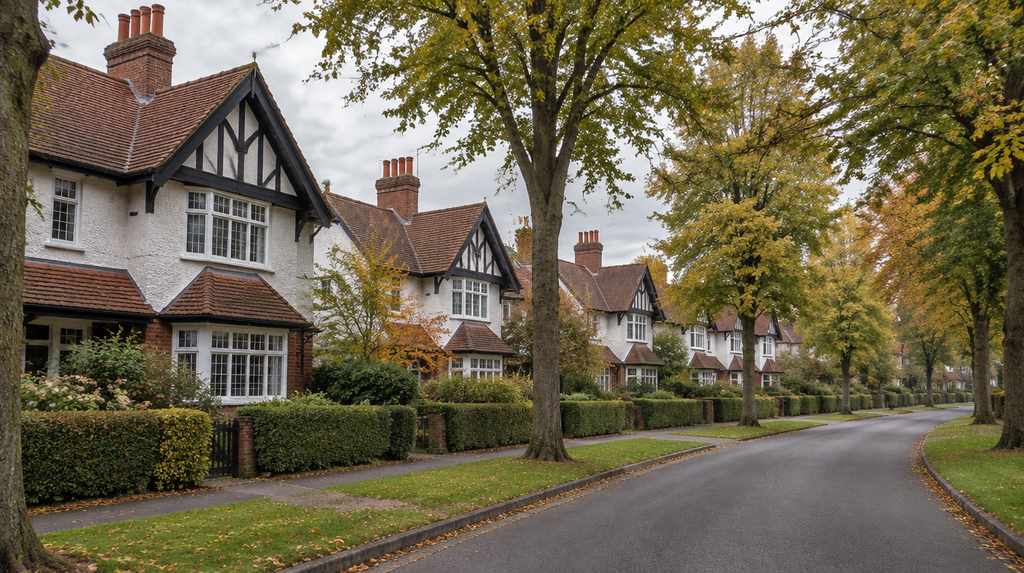
| Ealing, W5/W13 | £1,900 – £2,900/m² | Edwardian stock, facade and bay restoration, easier access |
| Barnet & Hampstead Garden Suburb | £2,200 – £3,600/m² | Garden Suburb Trust regime alongside council consent |
| St Albans, Hertfordshire | £1,900 – £3,200/m² | Listed and historic core, no Mayoral CIL, longer supply runs |
St Albans deserves a note. Because it sits in Hertfordshire rather than Greater London, Mayoral CIL does not apply, and district CIL rates differ from London schedules. That single distinction can save five figures on a larger scheme.
See how these play out in practice on our Alacross Road project in South Ealing, our Gloucester Terrace W2 refurbishment and the White City residence.
Where your money actually goes
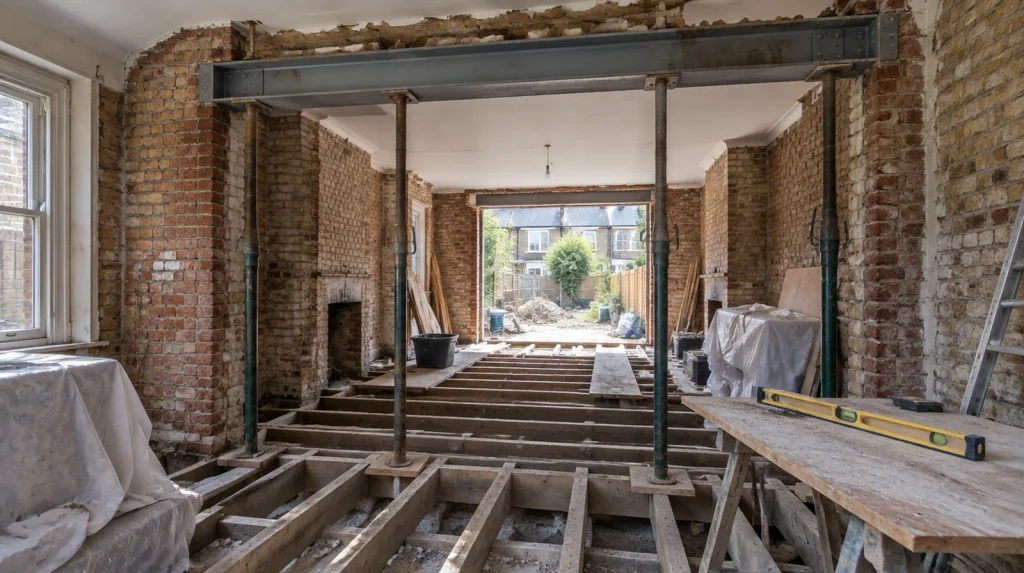
A full London renovation distributes roughly like this:
- Mechanical, electrical and plumbing: 17–20%. Rewiring, replumbing, heating and ventilation stay invisible until you open the walls, and period properties almost always need more than anyone allowed for.
- Structural works and shell: 20–25%. Steelwork, foundations, underpinning and roof alterations.
- Kitchens and bathrooms: 15–20%. See our guides to kitchen renovation and bathroom renovation.
- Joinery and finishes: 12–18%. Prime schemes push this higher through bespoke joinery.
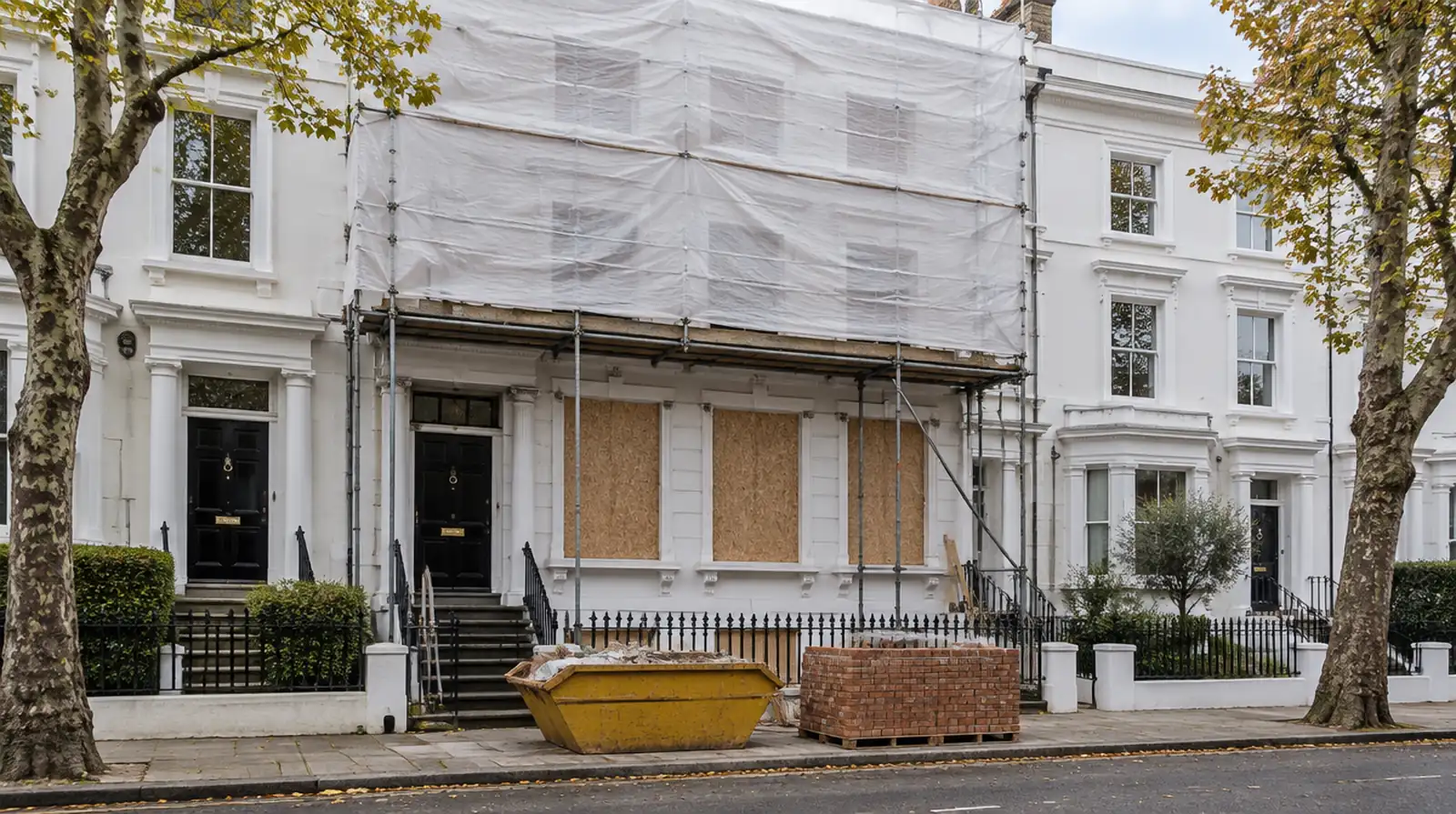
- Preliminaries and management: 10–15%. Scaffolding, welfare, skips, permits and supervision.
- Professional fees: 10–15% on top of construction.
Six costs homeowners routinely forget
- VAT at 20%. Most renovation work attracts the standard rate. However, renovations and alterations to residential properties empty for at least two years qualify for a reduced 5% rate covering labour and associated materials. Read VAT Notice 708 and ask your council for written evidence of the vacancy period.
- Contingency. Allow 10–15% on period stock. Asbestos, failed lintels and hidden subsidence appear once you open up.
- Scaffold and parking suspensions. Prime streets with controlled parking charge weekly.
- Temporary accommodation. A full renovation usually means moving out for six to nine months.
- Building control and planning fees. Pre-application advice costs money but saves more.
- Escalation. Fix your specification early if your start date sits 12 months out.
How to pressure-test a builder’s quote
Three quotes that differ by £150,000 usually differ in scope, not in price. Ask every contractor to price the same specification, break preliminaries out separately, and list provisional sums explicitly. Then check whether each quote includes party wall fees, CIL, scaffold licences and VAT, because many exclude all four.
Our guide on how to compare builders’ quotes walks through the full checklist, and how we work explains the way we structure a fixed-price contract.
Frequently asked questions
How much does a house renovation cost in London per square metre?
Between £1,400 and £3,500 per m² for most projects in 2026, excluding VAT. Structural work and prime heritage specification push that above £4,500 per m².
Does a conservation area increase renovation costs?
Yes. Expect 8–15% more on external works, plus longer consent periods. Conservation area designation restricts materials, window types and visible alterations, and it commonly removes permitted development rights.
Do I pay CIL on a house extension in London?
Usually not. CIL applies where you create more than 100 m² of net additional floorspace, so most householder extensions fall below the threshold. Claim any exemption before work starts.
Can I reduce VAT on a London renovation?
Sometimes. A property left empty for two or more years before work begins can qualify for the 5% reduced rate through a VAT-registered contractor.
How long does a full London house renovation take?
Plan on 9–14 months from first drawings to completion. Planning consent takes 8–13 weeks, party wall procedures add two to four months, and construction typically runs 20–36 weeks.
Is renovating cheaper than moving in prime London?
Frequently, yes. Stamp duty on a prime London purchase often exceeds the cost of a substantial structural remodel.
Talk to us about your project
We deliver residential renovation and refurbishment across west and north London, from Kensington and Westminster to Ealing and out to St Albans. We work directly with architects and designers and we price transparently from day one.
Start a project or explore our full house renovation service and house extensions.